
Artificial intelligence is transforming the way businesses operate. From automating workflows and analyzing market data to generating content and identifying potential leads, AI has become an essential tool for organizations looking to improve efficiency and scale faster. In sales and business development, AI is making it easier than ever to identify prospects, personalize outreach, and gain insights into customer behavior. Tasks that once required weeks of research can now be completed in a matter of hours.
Yet despite these advances, one reality remains unchanged:
People still do business with people.
AI can help companies discover opportunities and initiate conversations, but meaningful relationships, trust, and long-term partnerships are still built through human interaction. In today’s increasingly digital world, the ability to establish genuine connections may be more valuable than ever.
Information Is Abundant. Trust Is Scarce
One of the biggest consequences of AI adoption is the abundance of information. Today, nearly every company has access to similar tools, similar market insights, and similar automation capabilities. Competitive advantage is no longer determined solely by information. Instead, businesses are increasingly competing on trust. Decision-makers receive countless emails, messages, and sales pitches every day. They can compare products, prices, and reviews within minutes. What they cannot easily evaluate is whether a potential partner is reliable, credible, and aligned with their long-term goals.
Trust is not built through automation.
It is built through conversations, shared experiences, and consistent interactions over time.
Why Human Connections Still Drive Business Decisions
Business decisions are often presented as rational and data-driven.
In reality, most important decisions contain a strong human element.
Whether selecting a supplier, forming a strategic partnership, or making an investment, decision-makers often ask:
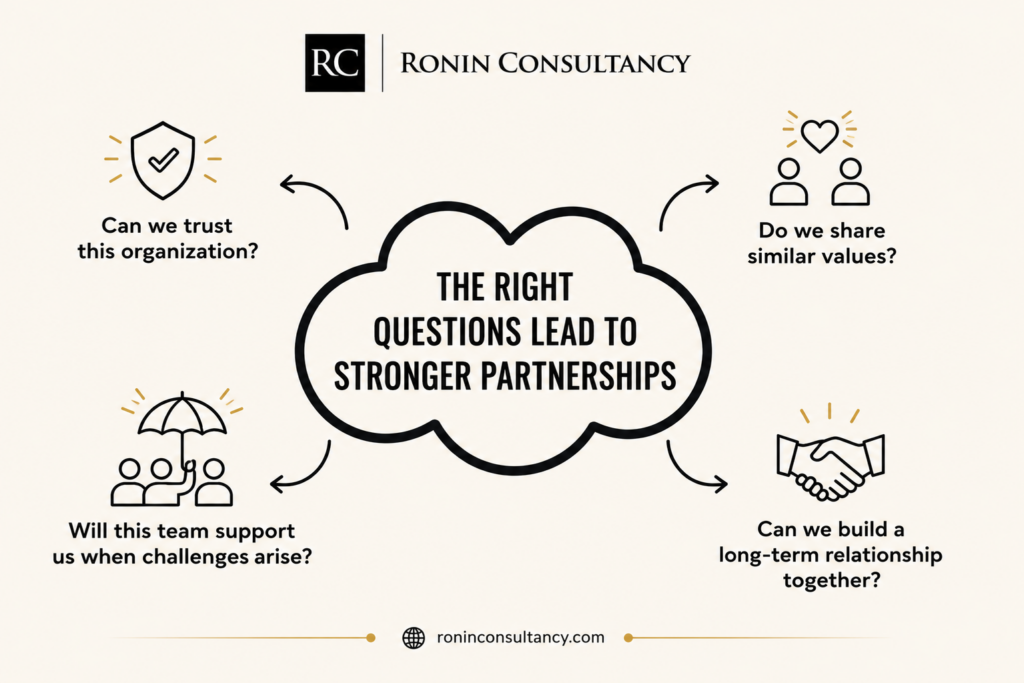
These questions cannot be answered through dashboards or AI-generated reports.
They are answered through human interaction.
A conversation at an industry conference or an introduction through a trusted contact often influences decisions more than a perfectly designed presentation
The Growing Importance of Networking in the AI Era
Ironically, the rapid advancement of artificial intelligence is making human networking more valuable rather than less. As routine tasks become increasingly automated, qualities such as communication, empathy, relationship building, and trust stand out as competitive advantages that technology cannot easily replicate.
This is precisely why international conferences, business forums, and industry events continue to attract thousands of professionals every year despite the availability of countless digital communication tools. While AI can introduce people to new opportunities and even recommend potential partners, it cannot replace the experience of sitting across the table, exchanging ideas, and building confidence through genuine conversation.
Today, networking is no longer about collecting business cards or expanding a contact list. It is about establishing meaningful relationships that can evolve into strategic partnerships, collaborative projects, and long-term business growth.
Finding the Right Balance Between AI and Human Connections
The future of business is not about choosing between artificial intelligence and human interaction. It is about using each for what it does best.
AI should be leveraged to automate repetitive tasks, analyze large volumes of data, identify potential markets, and generate qualified leads. By reducing manual work, teams can spend less time searching for opportunities and more time developing them.
Human interaction, however, should take over where trust becomes essential. Building strategic partnerships, negotiating complex deals, understanding cultural nuances, and maintaining long-term client relationships all require empathy, credibility, and genuine communication—qualities that technology cannot fully replicate.
Forward-thinking organizations are already adopting this hybrid approach. They use AI to improve efficiency while intentionally investing in networking events, face-to-face meetings, industry conferences, and relationship management. Instead of replacing people, technology creates more time for meaningful conversations.
In other words:
Use AI to find opportunities.
Use people to build trust.
Use trust to create sustainable business growth.
Businesses that understand this balance will not only operate more efficiently but also develop stronger partnerships, higher customer loyalty, and a competitive advantage that is difficult for competitors to imitate.
Looking at the future
Technology is becoming increasingly accessible, while trust remains difficult to earn. Artificial intelligence can help businesses identify opportunities, analyze markets, and automate countless processes with remarkable speed. However, it cannot replace the confidence built through a meaningful conversation, the credibility established through consistent actions, or the trust developed over time. The companies that will thrive in the coming years are not necessarily those with the most advanced AI tools, but those that understand how to combine technology with authentic human relationships.
We believe this can be summarized in a simple framework:
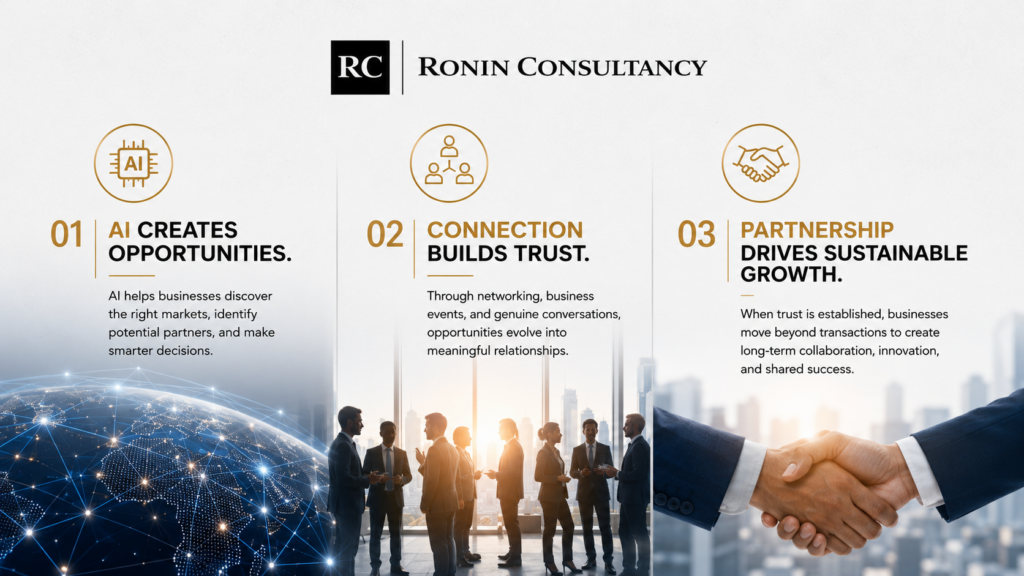
In the end, AI is a powerful accelerator, but it is people who create value. As artificial intelligence becomes available to everyone, the ability to build genuine human connections may become the most valuable business asset any organization can possess—and the strongest competitive advantage no algorithm can replicate.
Curious about how AI, networking, and strategic partnerships can accelerate your business growth? Visit our website